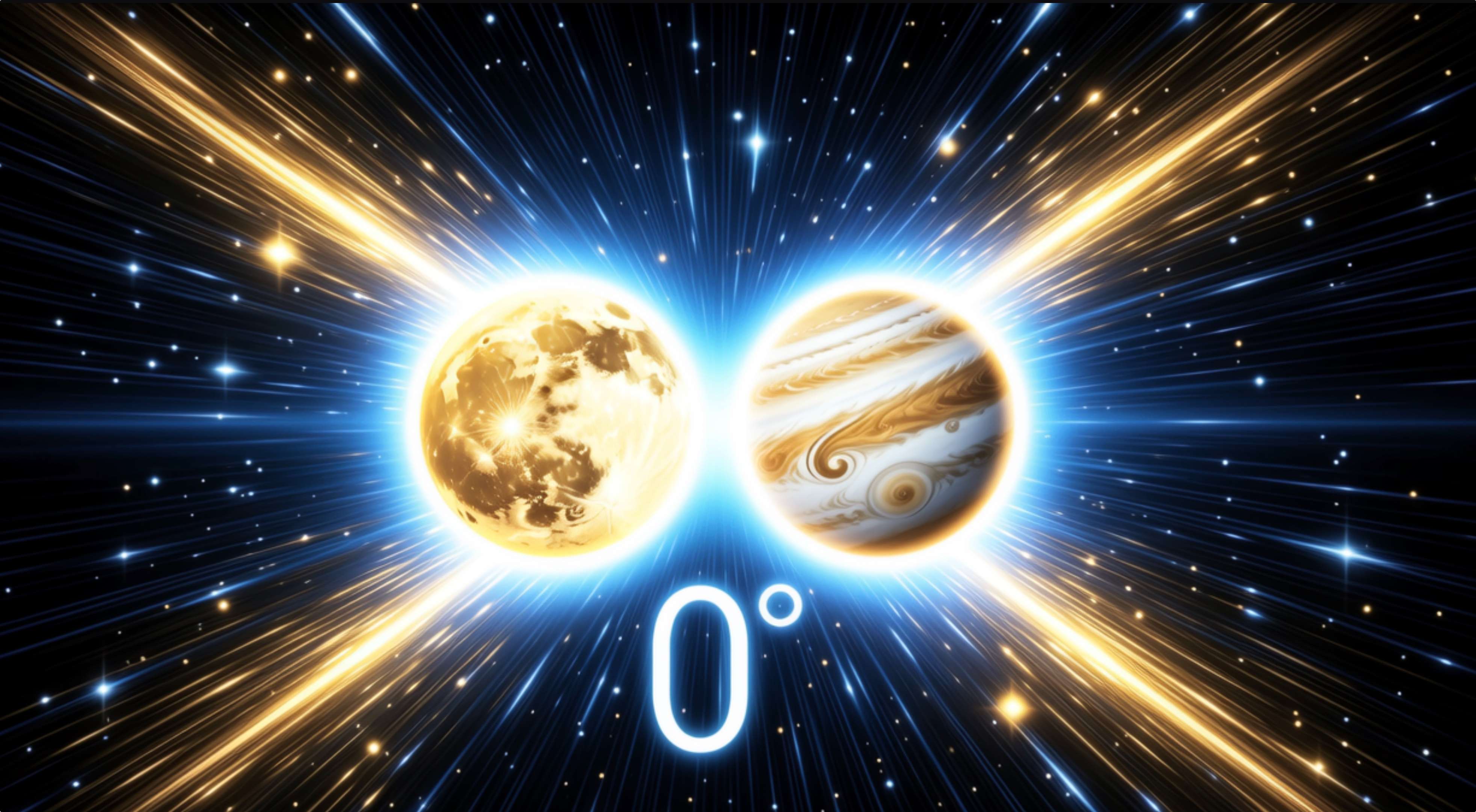
Conjunction in Astrology
Quick Overview
- Symbol: ☌
- Angle: 0°
- Nature: Neutral and amplifying
- Typical orb: 8° to 10°
What Conjunction Means in a Birth Chart
A conjunction happens when two planets occupy the same area of the chart, so their drives fuse into one concentrated signal. It is one of the strongest aspects because the planets stop acting like separate themes and start behaving like a single pressure point.
Conjunctions show what gets intensified, magnified, and made unavoidable in a birth chart. They can feel gifted or difficult depending on the planets involved, but either way they are central. They usually become part of a person’s obvious style, not a background nuance.
How Conjunction Usually Shows Up
- merged motivation that makes two planetary needs act as one
- high concentration, intensity, and difficulty creating distance
- strong talent or strong pressure depending on the planets involved
- blind spots that come from too much identification with one pattern
Strengths and Common Challenges
When the aspect is used well
At its best, a conjunction creates focus, conviction, and unusual strength. It can make someone highly skilled, clear, and potent because so much energy is concentrated in one place.
Where it can become difficult
The harder side of a conjunction is over-identification. The planets can become so fused that perspective gets lost. This may look like tunnel vision, intensity that overwhelms other parts of life, or difficulty separating one need from another.
Conjunction in Relationships and Timing
Relationship meaning
In synastry, conjunctions create immediate contact. They often feel compelling because one person activates the other directly. That can create chemistry, recognition, or pressure depending on the planets and the emotional maturity of the people involved.
Transit meaning
Transiting conjunctions often mark beginnings, activations, and concentrated turning points. They bring the planet’s symbolism forward so strongly that a new chapter, decision, or identity shift becomes hard to ignore.
Common Conjunction Examples
1. Sun conjunct Mercury
Identity and mind run close together, so communication becomes part of self-expression and self-definition.
2. Venus conjunct Mars
Attraction, desire, pleasure, and pursuit blend into a more visibly magnetic or passionate style.
3. Moon conjunct Jupiter
Emotion and expansion amplify each other, often creating generosity, emotional scale, or strong mood intensity.
Questions for Reflection
- Which two life themes feel impossible to separate in your chart or behavior?
- Where has focus turned into strength, and where has it turned into over-identification?
- What would more perspective change about the way you use this concentrated energy?
Related Reading
Keep going from Conjunction
These next pages connect this aspect type to the broader chart-reading guides people usually need after the first explanation.
Read the planetary aspects guide
Compare conjunctions, squares, trines, sextiles, oppositions, and minor aspects inside one practical framework.
Open the synastry aspects guide
See how the same aspect language changes when it is read between two different charts in relationship astrology.
Generate your birth chart
Read this aspect inside your real planet and house pattern instead of as a standalone keyword list.
Browse planet meanings
Go back to the planets involved so the aspect has sharper symbolic context and better interpretation range.